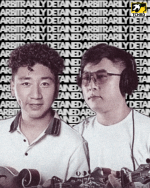
Geshe Lharampa Kunchok Chodrak in an undated photo.
In December 2024, local police in Sangchu (Ch: Xiahe) County, Kanlho (Ch: Gannan) Tibetan Autonomous Prefecture, Gansu Province, arbitrarily detained Tibetan Buddhist scholar Geshe Lharampa Kunchok Chodrak, the Tritsab (acting head lama) and scripture teacher at Hortsang Kirti Monastery. His arrest took place during a late-night raid on his monastic quarters, during which police confiscated documents related to the Kirti Monasteries General Buddhist Education Supervisory Group.
Since that night, Kunchok Chodrak’s whereabouts have remained unknown. Authorities have refused to provide his family or monastery with any information about where he is being held, the charges against him, or his physical condition.
Kunchok Chodrak was born in Dokhyog Village, Dzoege (Ch: Ru’ergai) County, Ngaba (Ch: Aba) Tibetan and Qiang Autonomous Prefecture, Sichuan Province, in the traditional Tibetan province of Amdo. He was enrolled at Taktsang Lhamo Kirti Monastery as a child. In 2019, he earned the highest academic degree in the Gelug tradition, the Geshe Lharampa, and in 2021 was appointed Tritsab of Hortsang Kirti Monastery, continuing the tradition in which its head lama (Tripa) is chosen by its mother monastery, Taktsang Lhamo Kirti.
Seven months after his detention, in July this year, Chinese authorities escalated repression against the Kirti monastic network. Officials formally dissolved the Kirti Monasteries General Buddhist Education Supervisory Group, an inter-monastery body composed of the heads of four Kirti monasteries: Kirti Monastery in Ngaba (Ch: Aba) County, Taktsang Lhamo Kirti in Dzoege (Ch: Ru’ergai) County, Hortsang Kirti in Sangchu (Ch: Xiahe) County, and Tsodhun Kirti in Barkham (Ch: Maerkang) County. The group collectively oversaw Buddhist education across the network. Authorities accused it of maintaining links with Kirti Rinpoche, the head of Kirti Monastery living in exile, and its dissolution permanently dismantled one of the few remaining bodies coordinating monastic education in the region.
At the same time, authorities reimposed and intensified a long-standing prohibition on displaying photographs of Kirti Rinpoche. While similar bans have been enforced repeatedly in the past, the July 2025 campaign was more aggressive and expansive. Monasteries across Ngaba Prefecture and adjacent areas were ordered to remove any remaining images, with officials conducting sweeping inspections in monastic dormitories and lay households to confiscate photographs and other religious items.
Authorities also barred the annual summer religious gathering traditionally held in July, which brought together monks from across the Kirti network. Local Tibetans were warned that any possession or display of Kirti Rinpoche’s image was now explicitly defined as a “political crime.” Sources indicate that the campaign was coordinated at multiple levels, including the central government, Sichuan provincial authorities, Ngaba Prefecture officials, and local county governments.
The July 2025 photo-removal order is part of a broader, long-term policy to erase visible expressions of loyalty to Tibetan religious leaders in exile. Similar bans targeting Kirti Rinpoche’s image have been implemented multiple times since the 2000s, often in conjunction with “patriotic education” drives or political campaigns. Past operations included confiscations from monastic quarters, private homes, and even public spaces, with noncompliance treated as a political offense. These repeated campaigns have created a climate of fear and self-censorship in communities affiliated with the Kirti lineage.
These measures continue a decades-long pattern of targeting Tibetan religious and cultural institutions. In the 1980s and early 1990s, Ngaba Prefecture experienced a vibrant intellectual and cultural renaissance, fueled in part by monastery-educated Tibetan writers, filmmakers, and academics, many of them connected to Kirti Monastery, which produced several notable figures. By the late 1990s, however, the Chinese Communist Party’s United Front Work Department moved to suppress this revival, beginning with Kirti, one of the largest and most influential monasteries in the region. The campaign began abruptly in June 1998, when officials from the United Front and the State Administration for Religious Affairs (SARA) arrived at the monastery, launching “patriotic education” programs and imposing strict political controls.
On 1 January this year, the Chinese government brought into force the revised Measures for the Administration of Tibetan Buddhist Temples that entrench political control over Tibetan religious institutions and sharply curtail religious freedom. Article 4 compels “religious groups, religious schools, and religious activity sites” to support Party leadership, uphold the socialist system, promote “core socialist values,” and safeguard state-defined national unity, ethnic unity, religious harmony, and social stability. Article 5 prohibits temples from restoring so-called “religious feudal privileges” or “systems of oppression and exploitation,” bans subordinate relationships between temples, and bars any external, particularly foreign involvement in temple affairs. The vague and politicized language in these provisions enables arbitrary enforcement and further erodes the right to freedom of religion in Tibet. Authorities have applied these provisions to dismantle religious-education networks, criminalize contacts between Tibetan monasteries and religious leaders in exile, and target the influence and activities of the Kirti lineage.
Geshe Lharampa Kunchok Chodrak’s case adds to a growing list of Kirti monks punished for peacefully practicing their religion and expression. According to TCHRD’s political prisoners database, at least eleven known Tibetans from Kirti Monastery in Ngaba have been detained and imprisoned since 2020, including Go Sherab Gyatso, Lobsang Choephel, Geshe Sonam Gyatso, Geshe Rachung Gendun, Lobsang Thapkey, Lobsang Trinley, Lobsang Samten, Pema, Thapkey Gyatso, Lobsang Tashi,and Lhundup.