The Chinese government should urgently ensure that imprisoned Tibetan political prisoners Gangkye Drupa Kyab and Tsering Dolma are provided with timely, adequate and appropriate medical care and treatment. They remain in detention under conditions that raise serious concerns about their physical well-being, particularly in light of reports indicating limited access to necessary healthcare services. Continued incarceration without proper medical attention places them at heightened risk of serious and potentially irreversible health deterioration.

Gangkye Drupa Kyab, 47, is a Tibetan writer and teacher who was held at Mianyang Prison in Sichuan. In 2024, his family was permitted a visit; however, all subsequent requests have been denied, and his family has received no official information regarding his condition or current whereabouts. Sources have informed TCHRD that he is in critical health as a result of torture endured in prison. He is reportedly suffering from cardiac and renal complications, as well as vision loss and amnesia.
He was arbitrarily detained and arrested on 23 March 2021 by the Serta County Police and was sentenced to 14 years in prison in 2022 on politically motivated charges of “inciting separatism” and “endangering national security”. He had earlier been detained twice in 2012 and 2016. Following his detention on 15 February 2012, he was subjected to enforced disappearance until his sentencing on 1 August 2013, when the Nyagchu People’s Court handed him a prison term of five and a half years. The charges stemmed from allegations that he was a member of an underground group known as “Margol Tsogpa” (Anti-Communist Association) in Nyagchu (Ch: Yajiang) County, Kardze Tibetan Autonomous Prefecture. After completing his sentence, he was released on 16 September 2016. However, he was detained again the same day for holding a portrait of His Holiness the Dalai Lama above his head during a public banquet organized to mark his release.
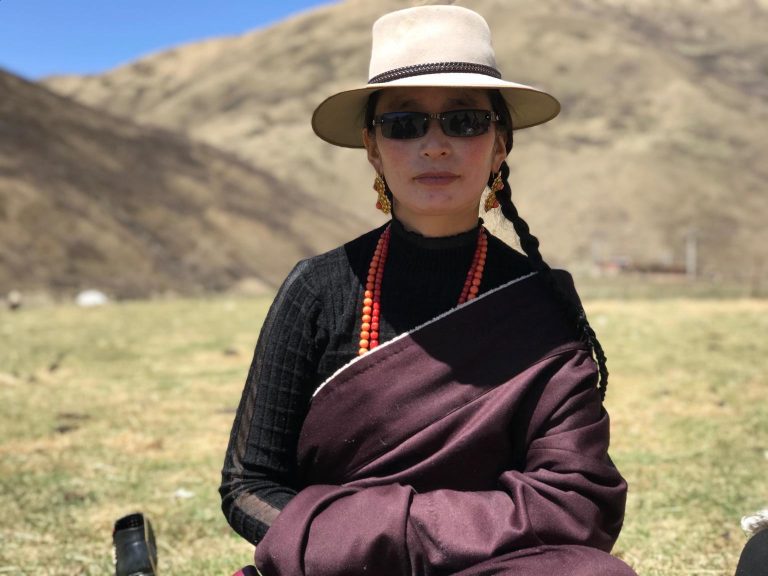
Tsering Dolma, mother of two, from Serthar County is also reported to be in a critical condition, suffering from a fractured hip, worsening memory loss, and severe cardiac issues as a result of repeated abuse by Serthar County police authorities. Given her history of torture and long term health complications, the aggravation of abuse raises urgent concerns about the irreversible impact on her health.
She was arbitrarily detained on 2 April 2021 and sentenced to 8 years in prison in 2022. Following her initial detention in 2008 along with her father for partaking in the 2008 Tibet uprising, she was subsequently arrested multiple times between 2008 and 2012. During her detention, she was subjected to prolonged beatings and torture for “disobedient behavior”, resulting in a broken leg and lasting health complications, including amnesia and heart disease. After her release, she remained under strict surveillance, with her movements closely monitored and frequent summons issued by the local police.
China has a longstanding pattern in which Tibetans have died in custody as a result of severe torture, ill-treatment, and the denial of adequate medical care as evidenced by multiple documented cases. In May 2020, former political prisoner Choekyi died after authorities repeatedly denied him access to medical treatment for serious health complications from torture endured during his four-year imprisonment. Despite suffering from extensive organ damage, he was not permitted to seek hospital care.
Similarly, Lhamo, mother of three, died in police custody in August 2020 after being subjected to severe beatings following her detention for sending money to family members in India. Her death highlights the acute risks faced by Tibetan detainees, particularly in environments where protection from abuse and access to medical care are systematically denied.
As a state party to the Convention against Torture and Other Cruel, Inhuman or Degrading Treatment or Punishment, China is legally obligated to prevent acts of torture and ill-treatment, conduct prompt and impartial investigations into credible allegations of abuse, and ensure effective remedies where violations occur. The reported denial and obstruction of medical treatment for Drupa Kyab and Tsering Dolma constitutes a flagrant violation of these obligations.
“We are deeply concerned about the condition of Tibetan political prisoners, Gangkye Drupa Kyab and Tsering Dolma, and call on the international community to intensify pressure on the Chinese government to secure their immediate and unconditional release,” said Dawa Tashi, researcher at the Tibetan Centre for Human Rights and Democracy.