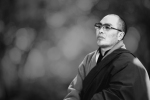
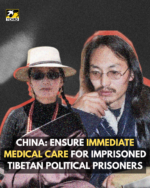
According to the latest information received by the Tibetan Centre for Human Rights and Democracy (TCHRD), Dhargye, a 64-year-old Tibetan monk, has been secretly sentenced to seven years in prison following his arbitrary arrest in August 2021 in Lhasa, Tibetan Autonomous Region (TAR).
Dhargye’s family members learned of his sentencing only in late January this year. They have not been informed of the date of sentencing, the court that delivered the verdict, or his current place of detention. Information about his enforced disappearance only emerged last year. It is also unclear whether any formal trial was conducted. Throughout this period, his family has received no official notification regarding his detention, charges, or sentencing.
Information received by TCHRD indicates that Dhargye was sentenced for making religious monetary offerings Kyab-ten and Ngo-ten to His Holiness the Dalai Lama. He is also believed to have been accused of assisting Tibetan monks to leave Tibet.
A source told TCHRD: “Dhargye’s family members are very concerned about his wellbeing as he is already in his sixties, and the lack of any information about him is deeply troubling.”
TCHRD previously reported the arbitrary arrest of Dhargye in Lhasa along with his relative Tsering and a nun named Choekyi. While the two were released after several months, Dhargye remained in detention and was subsequently subjected to enforced disappearance.
Dhargye was widely known for his honesty, spiritual discipline, and service to the Tibetan community. A monk of Serta Sera Monastery, he spent years in Lhasa undertaking pilgrimages, engaging in long retreats, and receiving teachings from eminent lamas. He was frequently sought by local Tibetans to perform consecration rituals for sacred objects, scriptures, and stupas, and operated a small shop providing such religious services.
Recent developments indicate an intensifying pattern of repression targeting Tibetan Buddhist practices. Increasing numbers of Tibetans have been subjected to detention and imprisonment for engaging in acts of religious devotion, including making financial offerings to spiritual teachers living outside Tibet.
TCHRD has documented several such cases. In 2022, two Tibetan monks Rachung Gendun and Sonam Gyatso from Kirti Monastery in Ngaba (Ch: Aba) Tibetan and Qiang Autonomous Prefecture, Sichuan Province, were sentenced to three and two years in prison respectively. Their sentencing followed the discovery, through mobile phone communications, that they had sent monetary offerings to the Dalai Lama and Kirti Rinpoche, the exiled head of Kirti Monastery in India.
Similarly, a Tibetan monk named Lobsang Thapkhey was detained and interrogated at Ngaba County police station for sending a monetary offering of 2000 Chinese yuan as a prayer offering to the Dalai Lama, Kirti Rinpoche, and other Tibetan Buddhist teachers in India following the passing of a senior lama.
The criminalisation of such practices strikes at the core of Tibetan Buddhist belief, where offering (Tib: choepa) constitutes an essential expression of devotion and a means of maintaining the spiritual relationship between teacher and disciple. Restrictions on these practices undermine the ability of Tibetan Buddhists to freely manifest their religion and maintain spiritual connections.
Religion remains a primary target under the Chinese government’s “stability maintenance” policy. Authorities continue to equate expressions of loyalty to the Dalai Lama with crimes such as “inciting separatism” or “subverting state power.” This approach has resulted in the systematic restriction of the right to freedom of religion and belief, making it increasingly difficult for Tibetans to practice their faith without fear of reprisal in Tibet.